
Fjord & Fern shares practical, down-to-earth guidance on nordic-inspired slow living, coastal wellbeing and seasonal british food for readers across the UK.
- 0123456789
- Angle Bd Abdelmoumen & rue soumaya, Résidence
- [email protected]
Fjord & Fern shares practical, down-to-earth guidance on nordic-inspired slow living, coastal wellbeing and seasonal british food for readers across the UK.
 By Oliver Pemberton
There is a particular kind of British winter light — flat, silver, undecided — that seems to drain the colour out of everything. The temptation is to write the day off before it has begun, to treat it as something to be endured rather than lived. But gratitude does not need sunshine to work with. In fact, the Nordic approach to dark months suggests the opposite: when the big, dramatic pleasures are off the table, we simply get better at noticing the small ones.
This is the quiet genius of concepts like hygge and the Norwegian love of friluftsliv. They are not about pretending the weather is lovely. They are about lowering your expectations to a realistic, achievable level, then finding genuine pleasure there. A grey Tuesday is not a failure of a day. It is simply a different sort of day, with its own particular comforts attached.
Begin with something you hold in both hands. A mug of tea made properly — leaves, not a rushed bag — or coffee brewed slowly while the kettle ticks and the window steams up. In the depths of winter, a hot water with lemon and a slice of root ginger is a small ceremony that costs pennies and takes three minutes.
The gratitude here is not abstract. It is physical. Notice the weight of the mug, the heat through the ceramic, the first sip that travels all the way down. Then name one thing about the day ahead that you do not dread. It might be as modest as a phone call, a chapter of a book, or the fact that you have nothing at all scheduled after six o'clock.
The single most reliable cure for a low, grey mood is a waterproof coat that actually works. Not a fashionable one. A dry one. Alongside it: wellington boots that do not leak, a wool hat, and gloves you can still use your hands in. Dress for the weather as though you mean it, and the weather stops being an enemy.
If you live anywhere near the coast, winter is when it belongs to you again. Beaches in Northumberland, Pembrokeshire, Norfolk and the Scottish islands are emptier, wilder, and often more beautiful in January than in July. The sea does not care what month it is. Standing at the edge of it, hood up, watching the waves arrive with complete indifference to your mood, is a strangely steadying experience. Gratitude, in this context, is not about forcing joy. It is about registering that you showed up, that your feet are dry, and that the air smells of salt and cold stone.
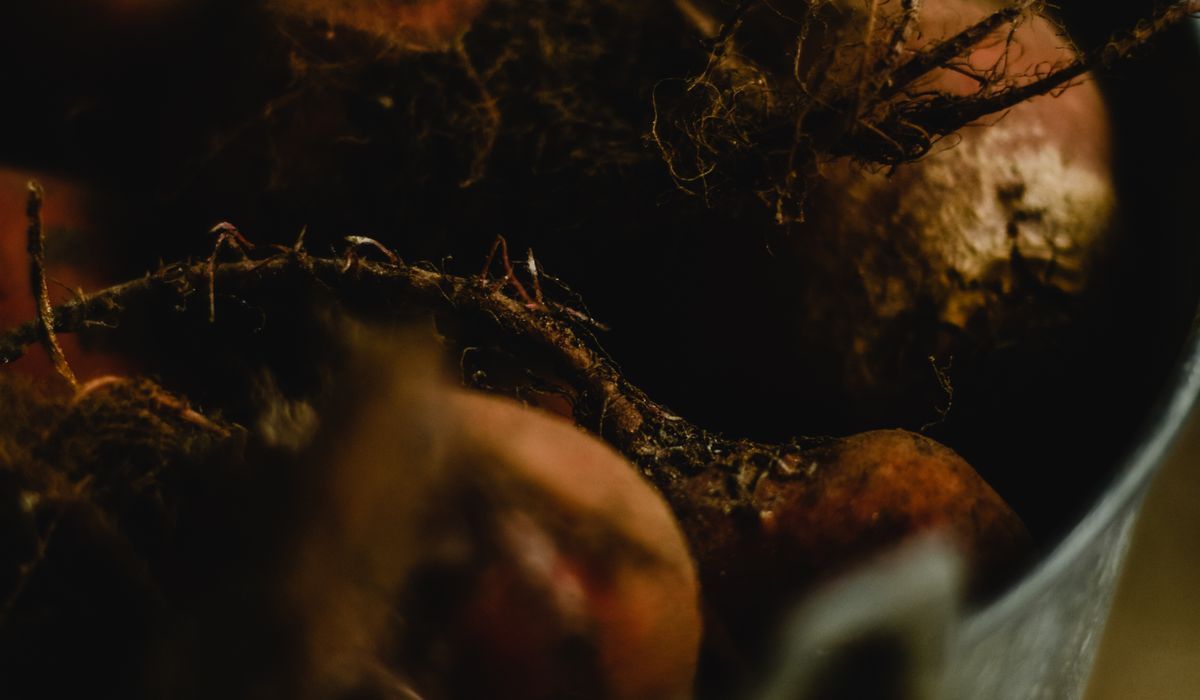
Gratitude is easier when your plate agrees with the calendar. January and February in Britain offer cavolo nero, January King cabbage, celeriac, parsnips, forced rhubarb from Yorkshire, mussels, sprats and cockles. These are not consolation prizes. They are some of the best things we grow and catch.
Roast a tray of parsnips and carrots with honey and mustard. Make a soup from whatever is wilting in the bottom of the fridge, finished with a swirl of cream and good bread. Steam a bag of mussels with cider, shallots and parsley — a fifteen-minute supper that feels like a treat and costs very little. Cooking something warm, from ingredients that belong to the season, is one of the most dependable ways to feel that the day has been well spent.
Nordic homes are built around the idea that light and warmth should be gathered, not wasted. A single lamp in the corner rather than the overhead light. A candle on the kitchen table. Wool socks. A blanket folded where you can reach it without getting up. None of this is extravagant, and all of it changes how an evening feels.
Set aside half an hour with no screen. Read, or mend something, or simply sit with the rain against the glass. Boredom of this gentle, chosen kind is where a lot of quiet appreciation lives. You cannot be grateful for your own life if you never stop long enough to notice it.
Gratitude held as a feeling fades. Gratitude held as a practice holds. Keep it small enough that you will still do it in February.
Grey days will keep arriving, and that is fine. With a warm drink, a dry coat, something seasonal on the stove and a lamp lit in the corner, they become not obstacles to your wellbeing but part of it.


We are not gonna make spamming
